Table Of Content
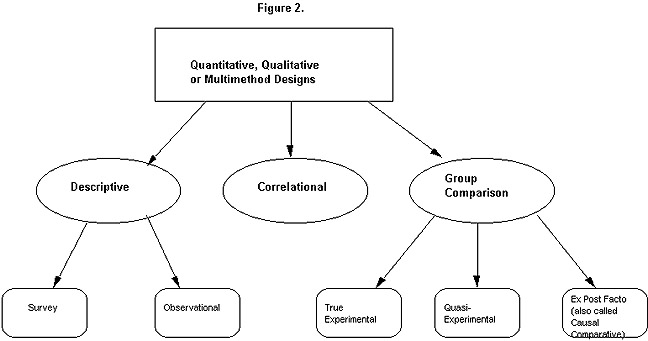
Suppose an apparel brand wants to understand the fashion purchasing trends among New York’s buyers, then it must conduct a demographic survey of the specific region, gather population data, and then conduct descriptive research on this demographic segment. If you’re not sure which methods will work best for your research design, try reading some papers in your field to see what data collection methods they used. Observations allow you to gather data on behaviours and phenomena without having to rely on the honesty and accuracy of respondents. This method is often used by psychological, social, and market researchers to understand how people act in real-life situations.
Quantitative Research – Methods, Types and...
It provides a comprehensive understanding of the “what” of the group or thing you’re investigating. Organizations use descriptive research designs to determine how various demographic groups react to a certain product or service. Quantitative studies are time- and resource-intensive, so knowing the hypotheses viable for testing is crucial. The basic overview of descriptive research provides helpful hints as to which variables are worth quantitatively examining.
Characteristics of Qualitative Descriptive Studies: A Systematic
Clinical presentation and management of multisystem inflammatory syndrome in children associated with covid-19: a ... - BMC Infectious Diseases
Clinical presentation and management of multisystem inflammatory syndrome in children associated with covid-19: a ....
Posted: Fri, 15 Mar 2024 07:00:00 GMT [source]
She must conduct a demographic survey of the region, gather population data, and then conduct descriptive research on this demographic segment. The study will then uncover details on “what are the water management practices and trends in village X.” Note, however, that it will not cover any investigative information about “why” the patterns exist. In survey research, respondents answer through surveys or questionnaires or polls.
How does descriptive research compare to qualitative research?
Surveys are a type of descriptive research that involves collecting data through self-administered or interviewer-administered questionnaires. Additionally, they can be administered in-person, by mail, or online, and can collect both qualitative and quantitative data. In this blog, we will explore the definition, characteristics, and common flaws in descriptive research design, and provide tips on how to avoid these pitfalls to produce high-quality results.
Case selection in qualitative research
Total of 26 service providers, program managers, and focal persons were participated through four focus group discussion and five key informant interviews. Our findings also suggest that service providers require additional training, particularly in programmatic management of drug-resistant tuberculosis. Qualitative description (QD) is a term that is widely used to describequalitative studies of health care and nursing-related phenomena.
This can be highly beneficial when you’re looking to understand the behaviors or preferences of a wider population. For example you might want to understand what percentage of CEOs have a bachelor’s degree or higher. Or you might want to understand what percentage of low income families receive government support – or what kind of support they receive.
Therefore, this method is often used to describe a specific subject’s different characteristics rather than generalizable facts. Descriptive research can prove to be a useful tool when trying to test the validity of an existing condition as it involves conducting an in-depth analysis of every variable before drawing conclusions. Naturalistic observation can be conducted by observing boys’ shoes in schools, malls, playgrounds, and other public spaces. In this article, we’ll look at what cross-sectional studies are, how it applies to your research and how to use Formplus to collect... In this article we’ll look at the different types and characteristics of extrapolation, plus how it contrasts to interpolation. Descriptive research explores research problems in-depth, beyond the surface level thereby giving a detailed description of the research subject.
Types of quantitative research designs
It involves open-ended interviews, observations, or small-scale surveys to gather qualitative data. The main purpose of descriptive research design is to describe and measure the characteristics of a population or phenomenon in a systematic and objective manner. It involves collecting data that describe the current status or condition of the population or phenomenon of interest, without manipulating or altering any variables.
Descriptive research methods
Descriptive statistics can include measures of central tendency (e.g., mean, median, mode) and measures of variability (e.g., range, standard deviation). I understood from my MDR-TB patient’s words that he kept to himself and avoided social interaction. He made this decision as a result of stigmatization by locals, including health extension workers. In addition, medical professionals exclude MDR-TB patients due to fear of exposures. Globally, an estimated 20% of previously treated cases and 3.3% of new cases are thought to have MDR-TB; these levels have essentially not changed in recent years. Globally, 160,684 cases of multidrug-resistant TB and rifampicin-resistant TB (MDR/RR-TB) were notified in 2017, and 139,114 cases were enrolled into treatment in 2017 [12].
Participants’ perceptions of specific care, interventions, or programswere described in detail in 11 articles. All researchers presented their findings withextensive descriptions including themes or categories. In 25 of 55 articles, figures ortables were also presented to illustrate or summarize the findings.
Descriptive studies are useful for estimating the burden of disease (e.g., prevalence or incidence) in a population. For instance, information on prevalence of cataract in a city may help the government decide on the appropriate number of ophthalmologic facilities. Data from descriptive studies done in different populations or done at different times in the same population may help identify geographic variation and temporal change in the frequency of disease. This may help generate hypotheses regarding the cause of the disease, which can then be verified using another, more complex design.
Descriptive Research in Psychology - Verywell Mind
Descriptive Research in Psychology.
Posted: Tue, 30 Jan 2024 08:00:00 GMT [source]
Inferential research, however, involves making inferences or generalizations about a larger population based on a smaller sample. Descriptive research typically involves analyzing data to generate descriptive statistics, such as means, frequencies, or percentages, to describe the characteristics or behaviors observed. Descriptive research is primarily concerned with providing an objective representation of the subject of study without explaining underlying causes or mechanisms.
A systematic review in Ethiopia reported 2% prevalence of MDR-TB [3] that is higher than what is observed in Sub-Saharan Africa, 1.5% [13]. The prevalence of MDR-TB, according to the national drug-resistant tuberculosis (DR-TB) sentinel report, was 2.3% among newly diagnosed cases of TB and 17.8% among cases of TB who had already received treatment,. This suggests a rising trend in the prevalence of TB drug resistance compared to the results of the initial drug-resistant TB survey carried out in Ethiopia from 2003 to 2005 [14]. A blueprint of the procedure that enables the researcher to maintain control over all factors that may affect the result of an experiment. Experimental research is often used where there is time priority in a causal relationship (cause precedes effect), there is consistency in a causal relationship (a cause will always lead to the same effect), and the magnitude of the correlation is great.
However, there is no way to assess the findings because you don’t manipulate any variables statistically. For instance, descriptive research can help determine how many CEOs hold a bachelor’s degree and what proportion of low-income households receive government help. It involves using a subset of a larger group as a sample to characterize the features of that larger group. Once you’ve clearly stated your criteria and objectives, you must also specify the nature of the data that must be gathered. When employing this research method, the researcher can choose to be a complete observer, an observer as a participant, a participant as an observer, or a full participant.
Explanatory research seeks to explain the relationships between variables and uncover the underlying causes or mechanisms. It is primarily concerned with providing an accurate and objective representation of the subject of research. While analytical research goes beyond the description of the phenomena and seeks to analyze and interpret data to discover if there are patterns, relationships, or any underlying factors. Correlational research is a type of descriptive research, which is used to measure the relationship between 2 variables, with the researcher having no control over them. It aims to find whether there is; positive correlation (both variables change in the same direction), negative correlation (the variables change in the opposite direction), or zero correlation (there is no relationship between the variables). Qualitative observation, on the other hand, involves the monitoring of characteristics and not the measurement of numbers.
Researchers must carefully consider descriptive research methods, types, and examples to harness their full potential in contributing to scientific knowledge. Descriptive research is a research method describing the characteristics of the population or phenomenon studied. This descriptive methodology focuses more on the “what” of the research subject than the “why” of the research subject. Data collection methods are ways of directly measuring variables and gathering information. They allow you to gain first-hand knowledge and original insights into your research problem.




No comments:
Post a Comment